Suspension Intolerance
Pre Syncope is your prime concern, as it threatens anyone suspended in a harness for more than a few minutes. It is this issue alone that caused the WAHR to demand rescue training, and even if you cannot recover the fallen worker to ground or to the nearest platform, you MUST ensure you prevent the onset of Pre Syncope.
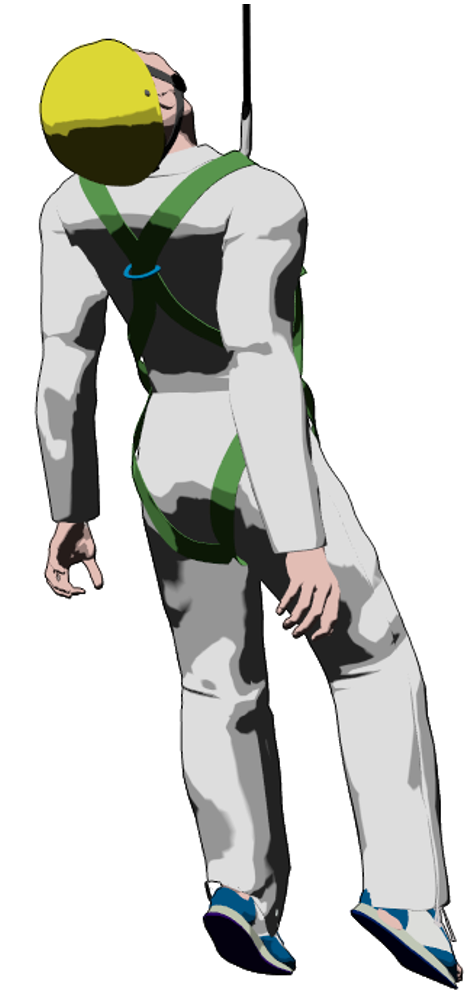
Pre Syncope (orthostatic intolerance) is a natural bodily reaction to being upright and immobile. It will affect anyone, irrespective of age, sex, fitness or other injuries, and it can cause death in less than half an hour. The heart cannot suck. Blood within the legs cannot be drawn back into the body, and gravity does a good job of keeping it there. Since all our blood volume will fit into the bottom half of our bodies, if we want to walk upright we need to deal with this problem – and humans have. The veins in our legs are buried inside the muscles, and have one-way valves every few inches. As we walk about, the muscles squeeze and pump the blood back up into the abdomen, and this keeps us alive – it’s also the reason monkeys can’t stand up for very long, as only humans have evolved this ‘muscular pump’. The problem of course is if we aren’t using the leg muscles, the pump stops. If you stand very still, or hang in a harness, then your blood gradually drains into your legs and stays there.
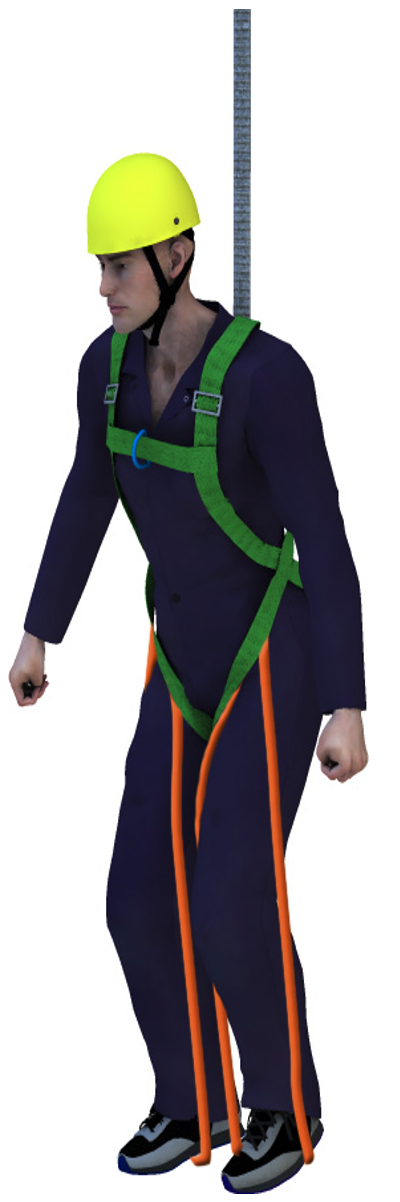
After a few minutes, your brain starts running low on oxygen. You feel dizzy, sweaty and your heart races, but this doesn’t help much. For some reason, we haven’t evolved a sudden craving to lie down, so after a few more minutes your brain forces you to lie down, by fainting. The problem is that your brain relies on this happening right away – a sensible plan so far in our evolution, as if you’re unconscious you fall over. In a harness, you stay upright – and your brain can’t cope with this! It doesn’t wake you up again; it simply waits for you to fall over. Waits. A while. Five minutes of waiting and you die anyway. So hanging upright in a harness, you possibly have 15 or 20 minutes to live, and it’s entirely natural, unpredictable and unstoppable. This is why you need to rescue them – but if you can’t get them out of their har ness within 10 minutes, you need to deal with it another way – and the secret is the ‘hanging upright’ bit. If you put them in a sitting position then pre syncope goes away – they can hang there for hours if need be.
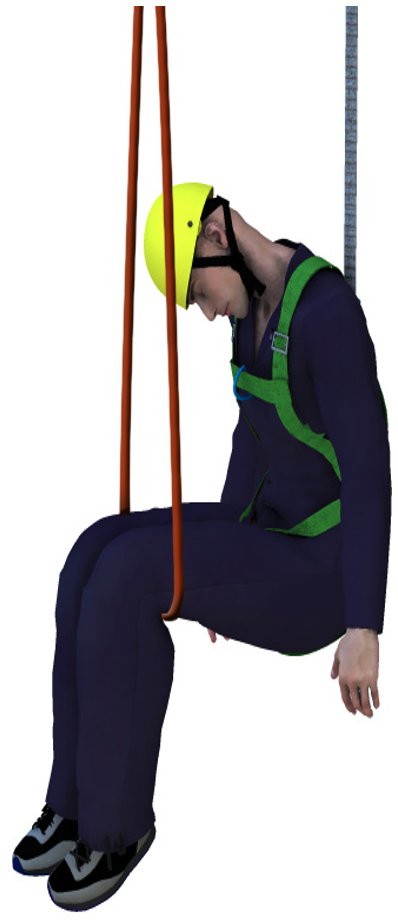
The first thing you need to do (to yourself or to your fallen colleague) is to raise your knees. Using a sling, polestrap, rope or a specialist knee-harness, it’s simple to lift the legs provided the front attachment point is used on the harness. This idea alone is not ‘adequate rescue training’ – you still need to plan, equip and train your workers to be able to get the casualty out of their harness and onto a place of safety without needing the help of fifteen firefighters and a crane.
BS8437 requires that rescues are planned for ‘every possible scenario’ in a workplace – not just the easy ones! It also asks that workers regularly practice their techniques and devise detailed plans each time they encounter a new type of structure or hazard. Many people will purchase a single rescue system and train once, then expect it to work every time – during an emergency is not the time to find out the rope isn’t long enough, or you can’t remember how to unlock the handle!
Equipment Inspection
All height safety PPE must be regularly inspected by an independent competent person, and those inspections recorded and retained by the owner. The person is ‘independent’ provided that they are not a user of the item they are inspecting, but they can be employees of the company who owns the equipment.

Every item of PPE must be marked with the CE symbol showing compliance to one or more EN standards. In cases where the standard can vary (such as a harness) the EN standard must also be marked. A serial number, batch or other code must indicate the year of manufacture, and the name of the manufacturer. There will also be a 4-digit number starting with zero, which is the ID of the testing agency who certify CE compliance – don’t confuse this with the date!
For fall arrest PPE (harnesses, lanyards, blocks, wire systems, etc) this must be done at least once a year (defined in BSEN365) and for abseil/rope access equipment it must be done every six months (defined in LOLER). However the WAHR adds to this, stating all PPE must also have a written independent inspection ‘after every exceptional circumstance which may affect the safety of the item’ – such as exposure to chemicals, heat, a fall (of the user OR the item) or any physical damage.
These written inspections must be kept for the lifetime of the item, and PPE not ‘in inspection’ cannot be used. The records should allow the item to be traced to the point of purchase and thereby to a certificate of EN conformity.
As well as these written inspections, the user of fall protection PPE must complete a visual and tactile inspect of the equipment before and after every use.
These before and after inspections need not be written down, but are very important. They identify damage, wear and tear, missing components and other issues which make the PPE unsafe BEFORE use, plus the need to clean, dry or repair the item AFTER use. If you find any faults with your PPE, you must report it and get the item reinspected.
When inspecting your PPE, you should consider all of the issues identified during your training course, and any dangers listed in the product instruction manual. Common issues include:
- Physical damage to fabric (broken threads, tears, cuts, overloading)
- Damaged stitching (on lanyards, harnesses, etc)
- Burns from direct heat or friction
- Weakening from exposure to excessive amounts of UV light
- Exposure to chemicals (acids, alkalis, solvents or cleaning agents)
- Rust and corrosion of metal components
- Reliable and correct operation of moving parts, springs and hinges
- Damage from a fall (or the item being dropped) from height
You should only use PPE that you are confident is safe. If in doubt, ask first!
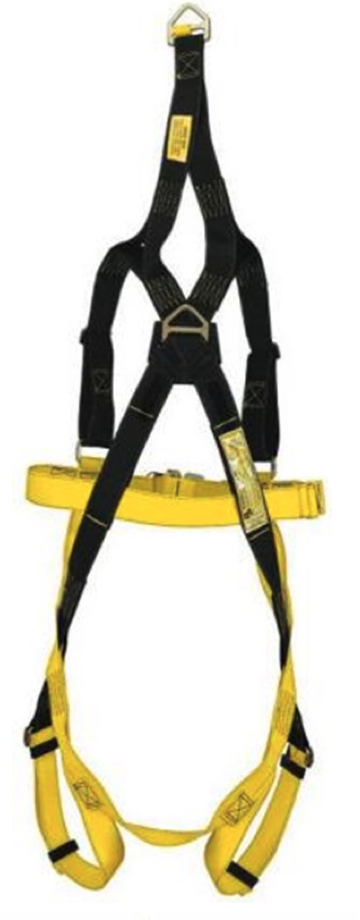
A rescue harness EN1497 is primarily designed to effect a rescue, as the casual ty is supported in the vertical position. This is ideal for confined space where the normal means of access and egress may be restricted. Most rescue harnesses are designed as fall arrest harness EN361 with the added attachment.
Under no circumstances must this rescue attachment be used as fall arrest.